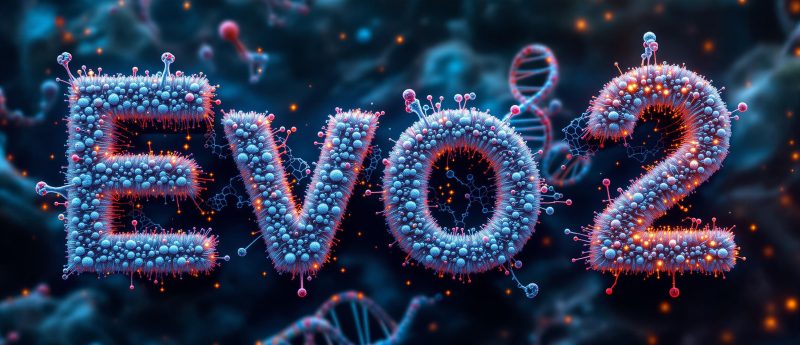
NVIDIA and the Arc Institute have launched Evo 2, a 40-billion-parameter generative AI foundation model capable of analyzing and designing genetic sequences across all domains of life. Trained on nearly 9.3 trillion ...

NVIDIA and the Arc Institute have launched Evo 2, a 40-billion-parameter generative AI foundation model capable of analyzing and designing genetic sequences across all domains of life. Trained on nearly 9.3 trillion ...

The medical field is evolving rapidly, now racing toward an AI-driven future powered by massive amounts of data. As words like “efficiency” and “speed” ricochet across the industry, it’s important ...
Scientists have long understood the basic parts of the human cell. The nucleus was discovered in 1833; the maze-like Golgi apparatus in 1898. But knowing a cell’s parts and functions ...
Researchers at the Institute of Cancer Research (London, UK) have developed a new AI model that predicts drug responses based on 3D cell shape changes. Experts believe this could halve ...

The practice of ophthalmology has been around for centuries. We find the first records of medical eye treatments as early as 1550 BC—nearly 3,600 years ago. But it was the ...

At the precipice of an AI-driven era, a wave of digital innovation could enhance every aspect of healthcare—from enhancing diagnostic accuracy to carrying out virtual consultations. But, fulfilling this promise hinges ...
Sit in on a neuroscience lecture at the University of Cambridge, and you might be surprised by what you learn—or rather, don’t learn. “By the end of this module, you ...

There’s no doubt about it: the advent of AI brings transformative potential for human society. And nowhere is this promise more profound than in healthcare — a globally exhausted sector ...

In 2008, researchers studying glioblastoma – the most aggressive type of malignant brain tumor – sequenced 20,000 genes from glioma samples from the Cancer Genome Atlas Program. Gliomas are tumors ...